
 guide to investment policy for housing co-operatives
Co-ops should put the money they have to work. This means investing in assets that increase in value or produce income over time.
 Housing-Provider-Kit-Financial-Management-Guide
When a reserve is not fully funded, the amount of cash in the reserve account is less than the amount that should have accumulated through annual provision transfers and interest earned,...
 Impact of Tax Reform on Agricultural Cooperatives
Cooperative directors and managers can respond to changes in the tax code in unique ways. Under Subchapter T of the Internal Revenue Code, cooperatives can deduct certain distributions of profits...
 Income Tax Treatment of Cooperative Patronage Refunds
The patronage refund is a key concept that distinguishes cooperatives from other forms of business. It is the vehicle by which cooperatives return earnings to users based on the amount...
 Income Tax Treatment of Cooperatives
The U.S. Department of Agriculture (USDA) prohibits discrimination against its customers, employees, and applicants for employment on the bases of race, color, national origin, age, disability, sex, gender identity, religion,...
 Income Tax Treatment of Cooperatives – Handling of Losses
Cooperative tax rules are a logical combination of the unique attributes of a cooperative and the income tax scheme in the Internal Revenue Code.
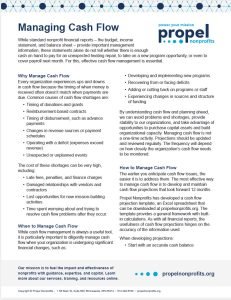 Managing Cash Flow
While standard nonprofit financial reports – the budget, income statement, and balance sheet – provide important management information, these statements alone do not indicate whether there is sufficient cash on...
 Managing Restricted Funds
Unique accounting standards require that nonprofits report contributed income in one of two categories: with donor restrictions or without donor restrictions.
 Managing Your Cooperative Equity
This report provides information on how a cooperative can manage its equity capital to achieve and maintain proportionality of investment, regardless of the type of capital plan employed. It discusses...
 Measuring Coop Financial Performance
This session concentrates on evaluating how well the coop itself is functioning. Participants will learn how to use three key indicators for measuring performance: financial status, delinquency, and occupancy.
 Monthly Management Reports to the Board
A board’s ability to make sound financial decisions is the cornerstone of any successful co-op; however, the information needed for informed decisions can only come from management.
 Multifamily Mortgage Assignment of Rents and Security Agreement
Sample Multifamily Mortgage Assignment of Rents and Security Agreement
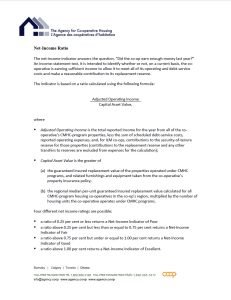 Net Income Ratio – Complete
An income-statement test is intended to determine whether, on a current basis, the cooperative is earning sufficient income to cover all its operating and debt-service costs and make a reasonable...
 net operating revenue policy chf Canada guide
Guide to the CMHC Net Operating Revenue Policy
 Nonprofit Impact Matters
We wrote this report for the stakeholders of America’s 1.3 million charitable nonprofits, which enrich the lives of everyone in our country by upholding our nation’s bold ideals and big-hearted...
 Nonprofit Operating Reserves and Policy Examples
A nonprofit organization may set aside a cash reserve to provide a cushion for both planned and unplanned future needs. This resource includes considerations for reserve planning, as well as...
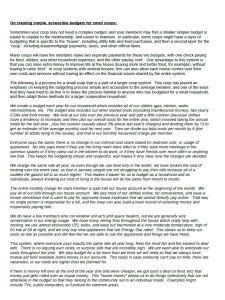 On creating simple, accessible budgets for small coops
Sometimes, your coop may not require a complex budget, and your members may find that a simpler, smaller budget is easier to explain to the membership and maintain.
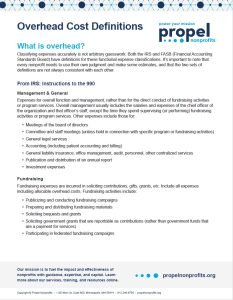 Overhead Cost Definitions
Classifying expenses accurately is not arbitrary; it requires careful consideration. Both the IRS and FASB (Financial Accounting Standards Board) have definitions for these functional expense classifications.
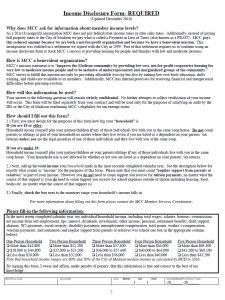 Income Disclosure Form Required
 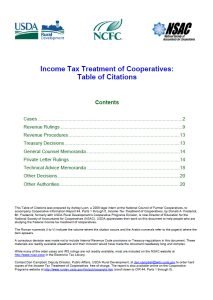 Income Tax Treatment of Cooperatives Table of Citations
  Introduction-to-Auditing-Exchange-Group-CPA
  Monthly Report of Excess Income
 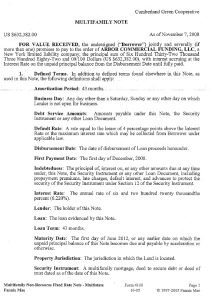 Multifamily Note
 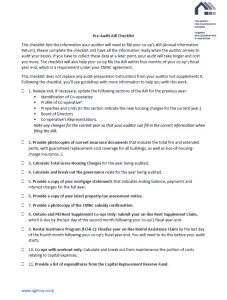 Pre-Audit Checklist