Home › Resource Library › Finance & Planning
Resource Library topic
Finance & Planning
Budgets, reserves, financial oversight, insurance, risk management, feasibility and long-range strategic planning.
Categories in this topic
Choose a category to see only its resources in the Resource Library.
All resources in this topic
The search below looks within this topic only. To search all 1,388 resources, use the full Resource Library. Books and journals are listed separately under Books and Journals.
Collection: Information Hub. Books, articles, guides, reports, journals, cheat sheets and sample forms collected online from other sources. They were written by other organizations and authors, not by Berendson Academy. Search Berendson Books & Training instead for materials created by Berendson Academy.
Showing 73–96 of 156 resources
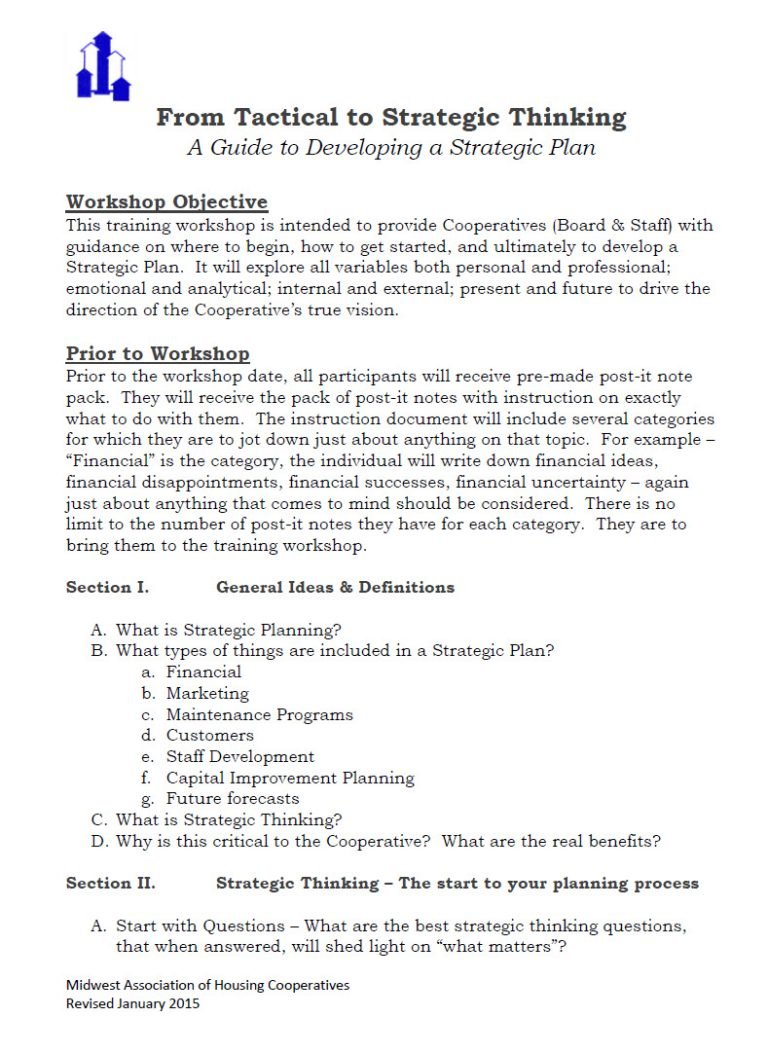
This training workshop is designed to provide Cooperatives (board and staff) with guidance on where to begin, how to get started, and ultimately to develop
A BCA (including an RFS) gives you important information about your co-op and the money needed to keep it in good condition now and in
Co-ops should put the money they have to work. This means investing in assets that increase in value or produce income over time.
When a reserve is not fully funded, the amount of cash in the reserve account is less than the amount that should have accumulated through
Cooperative directors and managers can respond to changes in the tax code in unique ways. Under Subchapter T of the Internal Revenue Code, cooperatives can
Planning a retreat is an important activity for every organization. During the retreat, enthusiasm builds for new programs and growth schemes.
One-page example chart for carrying out a strategic plan over three years. Each goal and strategy is assigned to the incoming president and the next
Two-page income disclosure form from Madison Community Cooperative (MCC) in Madison, Wisconsin, updated December 2010. It explains that, as a nonprofit making a payment in
The patronage refund is a key concept that distinguishes cooperatives from other forms of business. It is the vehicle by which cooperatives return earnings to
The U.S. Department of Agriculture (USDA) prohibits discrimination against its customers, employees, and applicants for employment on the bases of race, color, national origin, age,
Cooperative tax rules are a logical combination of the unique attributes of a cooperative and the income tax scheme in the Internal Revenue Code.
Twenty-two-page table of citations prepared in 2008 to accompany USDA Cooperative Information Report 44, Income Tax Treatment of Cooperatives (Parts 1–5), by Donald A. Frederick.
As part of the Institute’s expertise and transfer activities, the research deals with the priorities and practices of cooperatives in the area of innovation. Based
A 2020 webinar slide deck on insurance for housing cooperatives. It lists must-have and recommended coverages, common claims, the role of a broker and the
Cooperative housing, in contrast, divides insurance risks among several individuals and entities through multiple insurance policies affording fairly specific coverages.
A short slide presentation explaining what an audit is and is not, how auditors use materiality and sampling, and how to read the standard auditor’s
To enhance the inherent potential of cooperatives in supporting society’s transition towards global socio-ecological sustainability, they must plan strategically. Strategic planning with this goal in
While standard nonprofit financial reports – the budget, income statement, and balance sheet – provide important management information, these statements alone do not indicate whether
Unique accounting standards require that nonprofits report contributed income in one of two categories: with donor restrictions or without donor restrictions.
This report provides information on how a cooperative can manage its equity capital to achieve and maintain proportionality of investment, regardless of the type of
This session concentrates on evaluating how well the coop itself is functioning. Participants will learn how to use three key indicators for measuring performance: financial
A board’s ability to make sound financial decisions is the cornerstone of any successful co-op; however, the information needed for informed decisions can only come
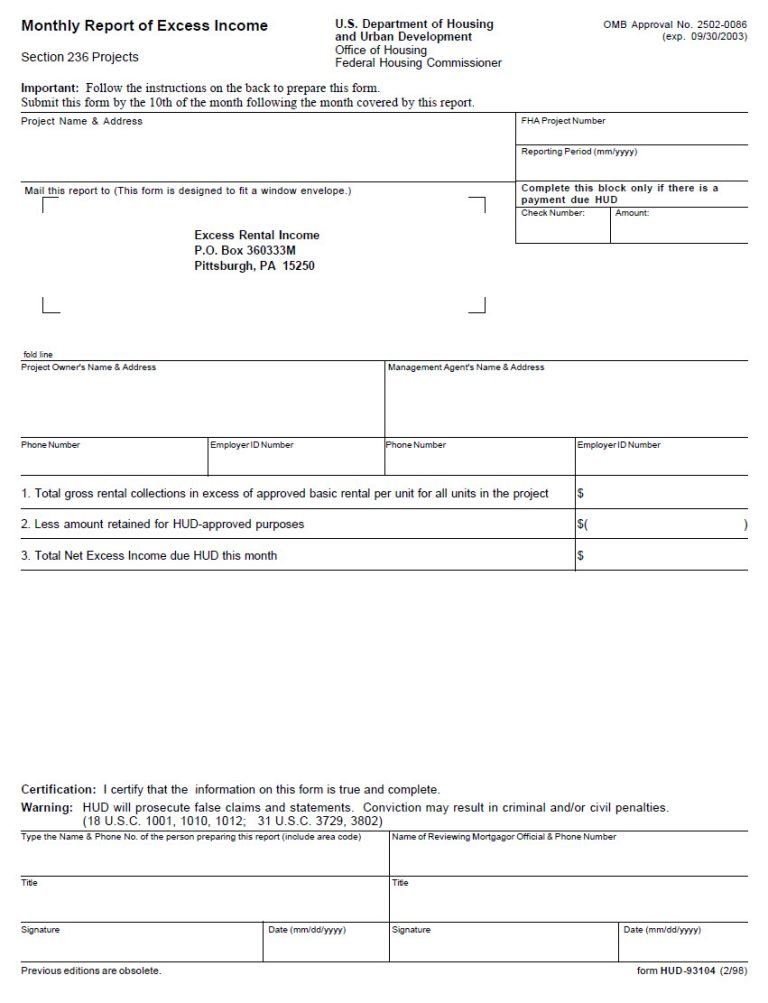
Two-page HUD form (HUD-93104, February 1998) with instructions for the Monthly Report of Excess Income required of Section 236 project owners. It explains that rent
Forty-page Fannie Mae Multifamily Mortgage, Assignment of Rents and Security Agreement for Illinois (Form 4014), the security document that accompanies a multifamily mortgage note. It