Home › Resource Library › Governance, Policy & Legal
Resource Library topic
Governance, Policy & Legal
Governance practices, policies, bylaws, articles of incorporation, house rules, legal compliance and HUD forms.
Categories in this topic
Choose a category to see only its resources in the Resource Library.
All resources in this topic
The search below looks within this topic only. To search all 1,388 resources, use the full Resource Library. Books and journals are listed separately under Books and Journals.
Collection: Information Hub. Books, articles, guides, reports, journals, cheat sheets and sample forms collected online from other sources. They were written by other organizations and authors, not by Berendson Academy. Search Berendson Books & Training instead for materials created by Berendson Academy.
Showing 193–213 of 213 resources
Cooperative self-governance, however, occasionally gives rise to disputes and litigation between cooperative boards and tenant shareholders when cooperation breaks down and individual self-interest takes over.
On April 4, 2016, the Office of General Counsel for the U.S. Department of Housing and Urban Development (HUD) issued a Guidance on the application
The Corporate Transparency Act (CTA), enacted in 2021, was passed to enhance transparency in entity structures and ownership, thereby combating money laundering, tax fraud, and
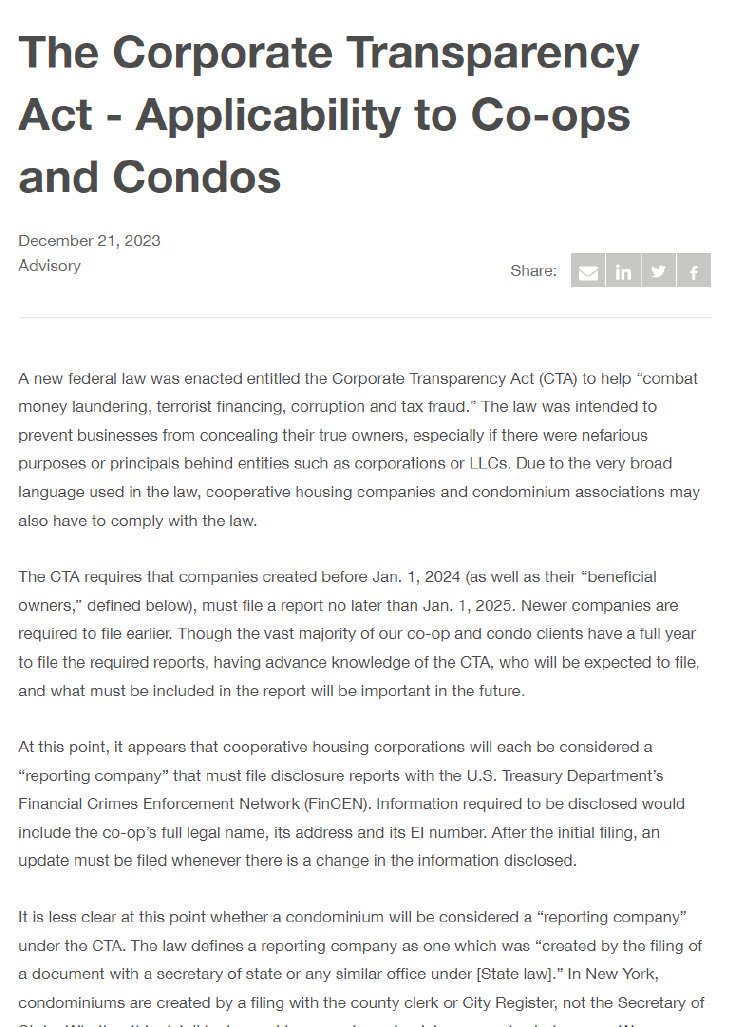
A new federal law was enacted, entitled the Corporate Transparency Act (CTA), to help “combat money laundering, terrorist financing, corruption, and tax fraud.” The law
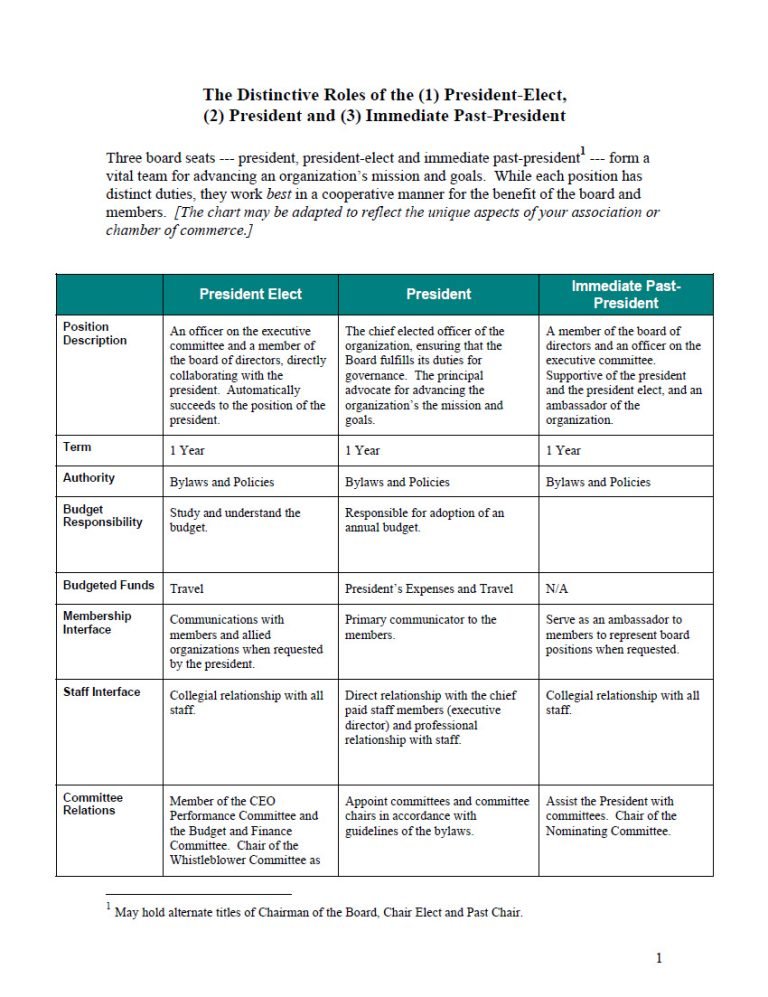
While each position has distinct duties, they work best in a cooperative manner for the benefit of the board and members.
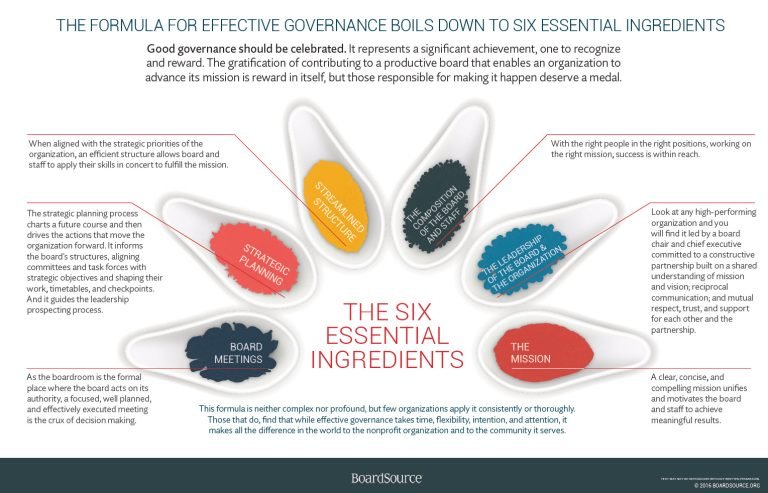
The gratification of contributing to a productive board that enables an organization to advance its mission is reward in itself, but those responsible for making
Cooperatives are characterized by mutual-benefit coordination mechanisms aimed at fulfilling members’ participation rights and welfare, consistently with the normative principles of democratic involvement, independence, and
Your board probably already has some organization in place – formal committees with delegated responsibilities. However, board governance takes the idea of defining board organization
These tips are based on the governance areas most likely to be a challenge for boards of small-to-mid-size nonprofit organizations, as identified in Leading with
Policies serve many purposes in an association. They represent the wisdom of the board of directors in interpreting the governing documents and identifying the best
A model training policy and procedure from a UK housing co-operative. It shows how a co-op can set up a training group and budget, run
Last week, a member of the board of directors gave his meeting packet to a local chapter president.
Sample bylaws for a New York City HDFC limited-equity cooperative, prepared through UHAB. Covers shareholders, records and audits, capital shares, meetings and voting, directors and
This guide was created as a tool to help empower the Board of Directors, Shareholders, and advisers of Housing Development Fund Corporation (“HDFC”) co-ops
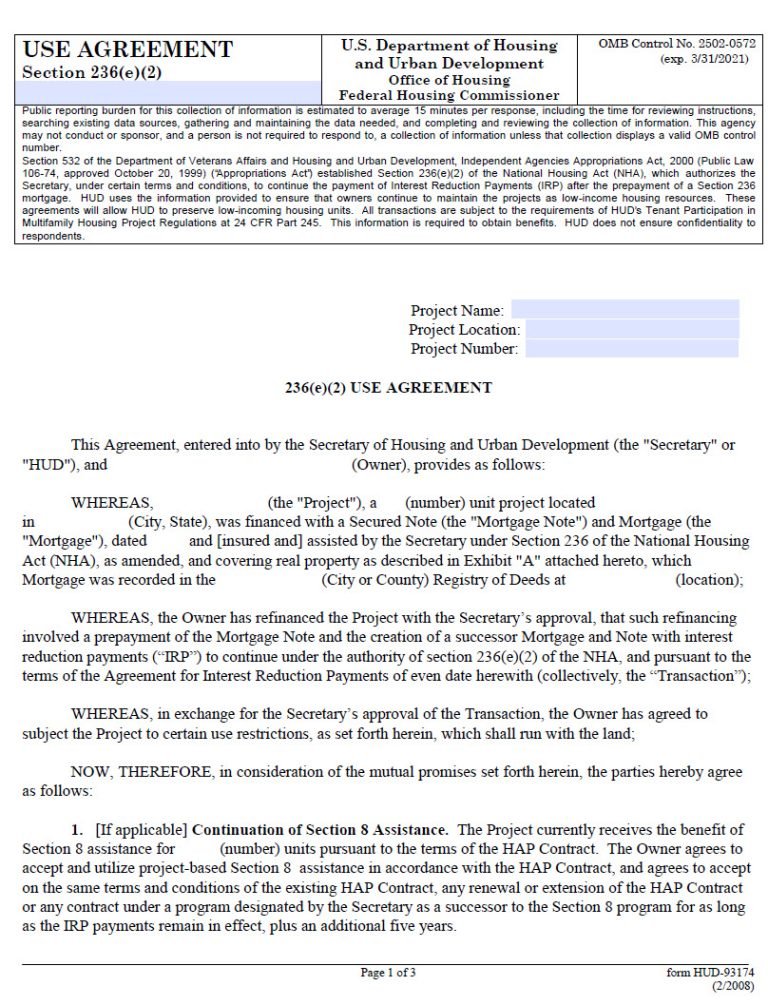
Three-page blank HUD Use Agreement form for Section 236(e)(2), signed when a Section 236 property is refinanced and keeps receiving interest reduction payments. The owner
Grounded Solutions Network created this toolkit to help communities understand their housing policy options and the approach that will work best for them. Community leaders
Policies are the collective wisdom of the board, passed on to future leaders. Policies interpret the bylaws and articles of incorporation, which are purposely broad
Has your co-op ever received a charge of employment discrimination? Such charges are often filed by co-op employees after termination.
You can’t take everything with you, but the following are suggestions about how long you should keep business and personal records on file:
It is the responsibility of all directors, officers, and employees to comply with the Code and to report violations or suspected violations in accordance with
The Form asks several questions about an organization’s policies. The aim is to answer the questions affirmatively by the time the form is used in