Home › Resource Library › Board & Committee Leadership
Resource Library topic
Board & Committee Leadership
Roles and responsibilities of directors and officers, board orientation and training, ethics, evaluation and building effective committees.
Categories in this topic
Choose a category to see only its resources in the Resource Library.
All resources in this topic
The search below looks within this topic only. To search all 1,388 resources, use the full Resource Library. Books and journals are listed separately under Books and Journals.
Collection: Information Hub. Books, articles, guides, reports, journals, cheat sheets and sample forms collected online from other sources. They were written by other organizations and authors, not by Berendson Academy. Search Berendson Books & Training instead for materials created by Berendson Academy.
Showing 73–96 of 349 resources
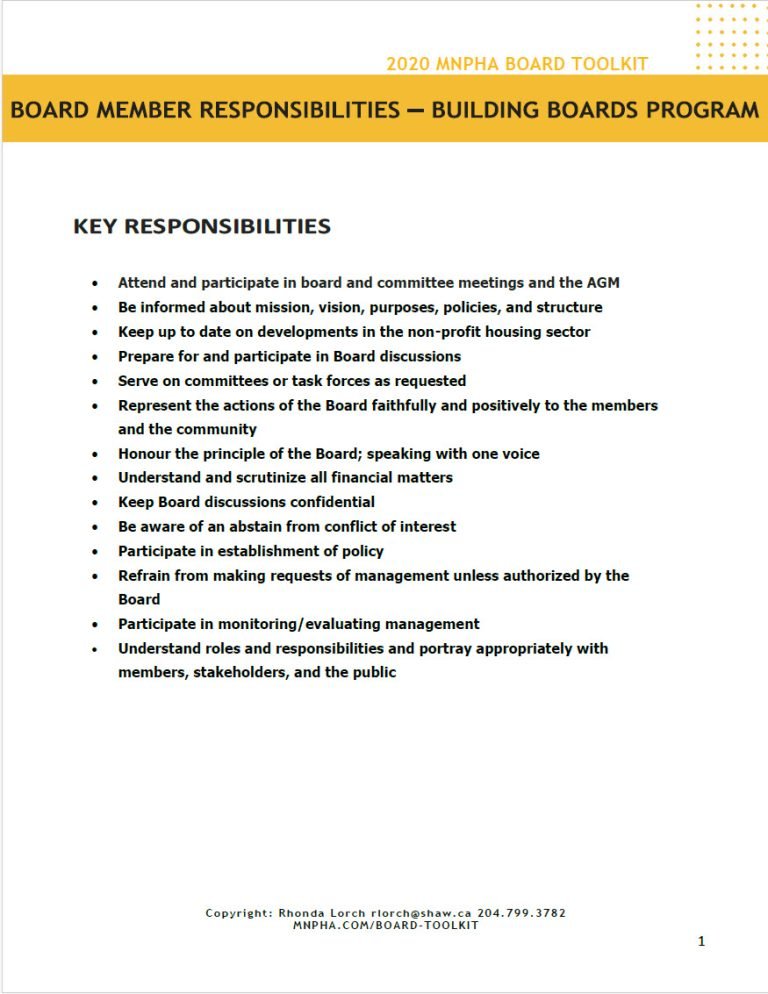
A one-page list of key responsibilities for nonprofit housing board members, from the MNPHA Board Toolkit (2020). It covers attending and preparing for meetings, understanding
One-page exit interview for departing directors, normally conducted by the nominating committee. Nine questions ask what the member gained, what they wish they had known
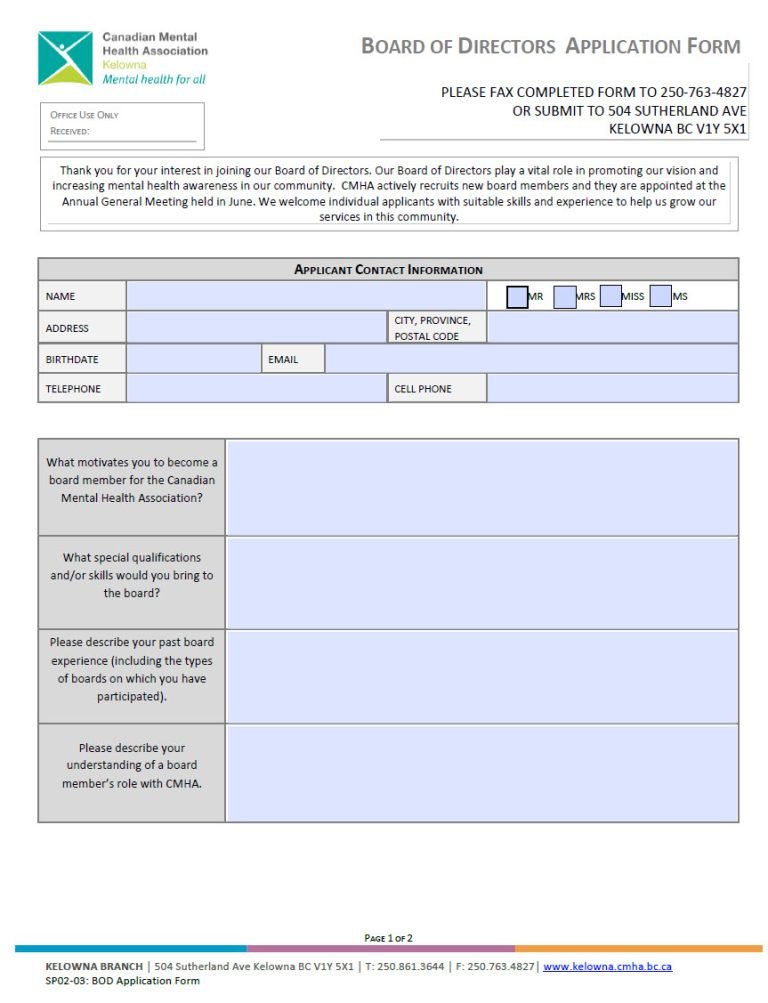
Two-page board application from a Canadian Mental Health Association branch in Kelowna, British Columbia. It asks about motivation, qualifications and past board experience, and includes
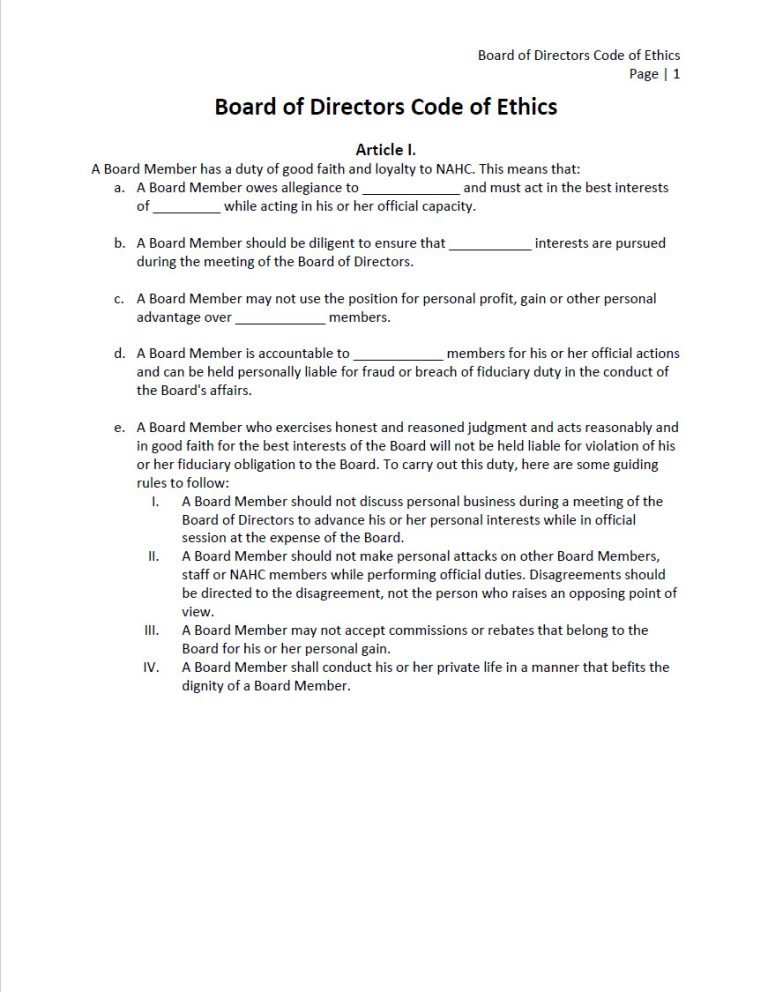
A fill-in-the-blank code of ethics for board members in six articles: loyalty and good faith, care and diligence, acting within the board’s authority, disclosing conflicts
The board of directors is central in a co-operative business. The directors need to be able to make informed decisions to ensure the co-op remains
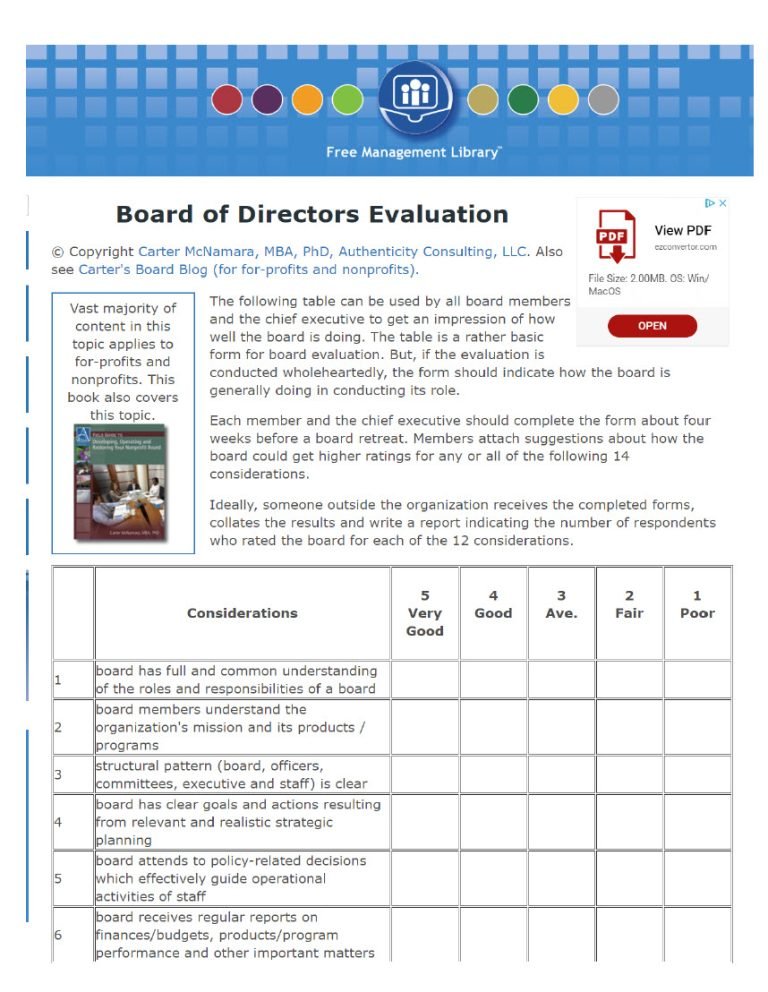
Links to the Free Management Library’s free Board of Directors Self-Evaluation form by Carter McNamara. Board members and the chief executive rate the board on
The overarching legal responsibilities of a non-profit Board are to ensure that the organization stays true to its mission, operates effectively, and acts in the
Techniques to improve the governance and management of associations, chambers, and nonprofit organizations.
Some have gained governance knowledge by educating themselves and serving on other boards. where they have successfully applied their specific expertise to their governance duties_
Whether the orientation of your new board member is approached informally or formally, be sure to include the basics needed for new board members to
A lack of orientation can lead to confusion, frustration, and wasted opportunities. This is key to supporting the goal of “acting with one voice” as
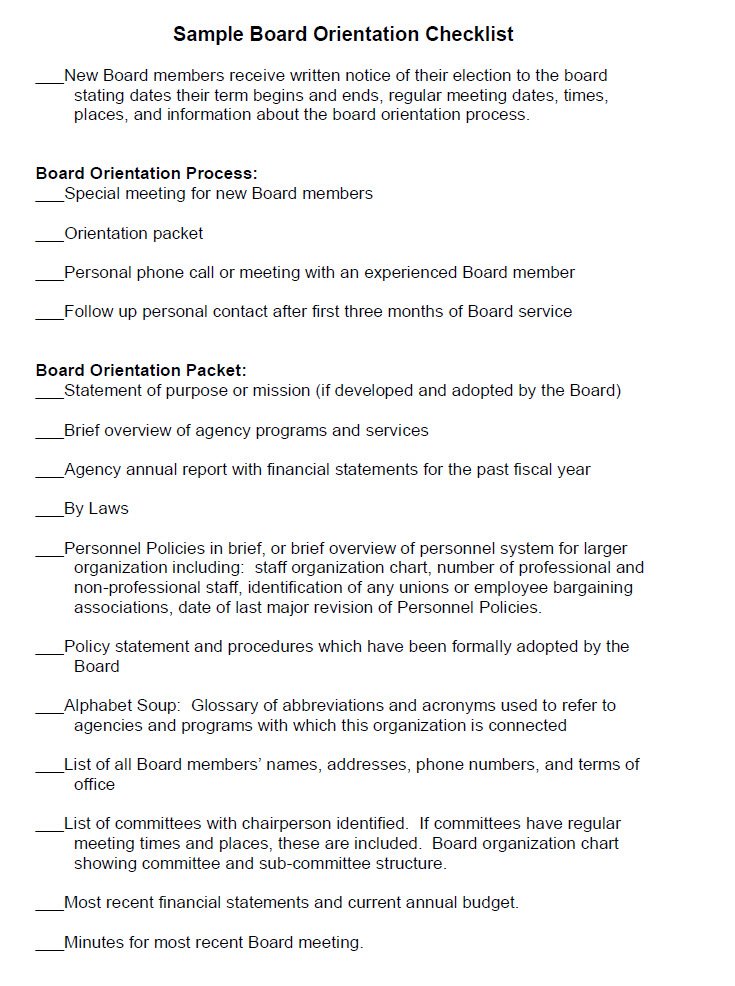
A two-page checklist for orienting new board members. It covers the welcome notice, the orientation packet (mission, bylaws, policies, financial statements, budget, minutes, board and
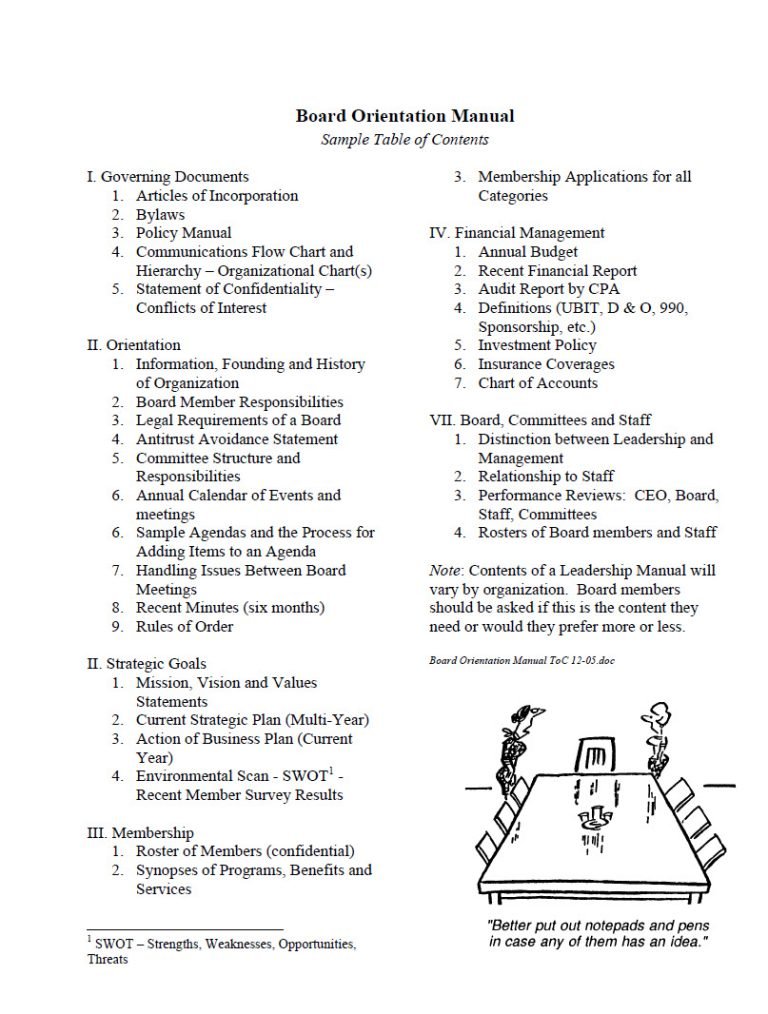
A one-page sample table of contents for a board orientation manual, not a complete manual. It lists what new directors should receive: governing documents, orientation
Directors require access to documents to perform their duties effectively. They must be familiar with the organization, including finances, programs, lines of authority, subsidiary organizations,
Governing practices and principles can seem awkward to new volunteers. While each person brings their passion and expertise, the duties of governance require a distinct
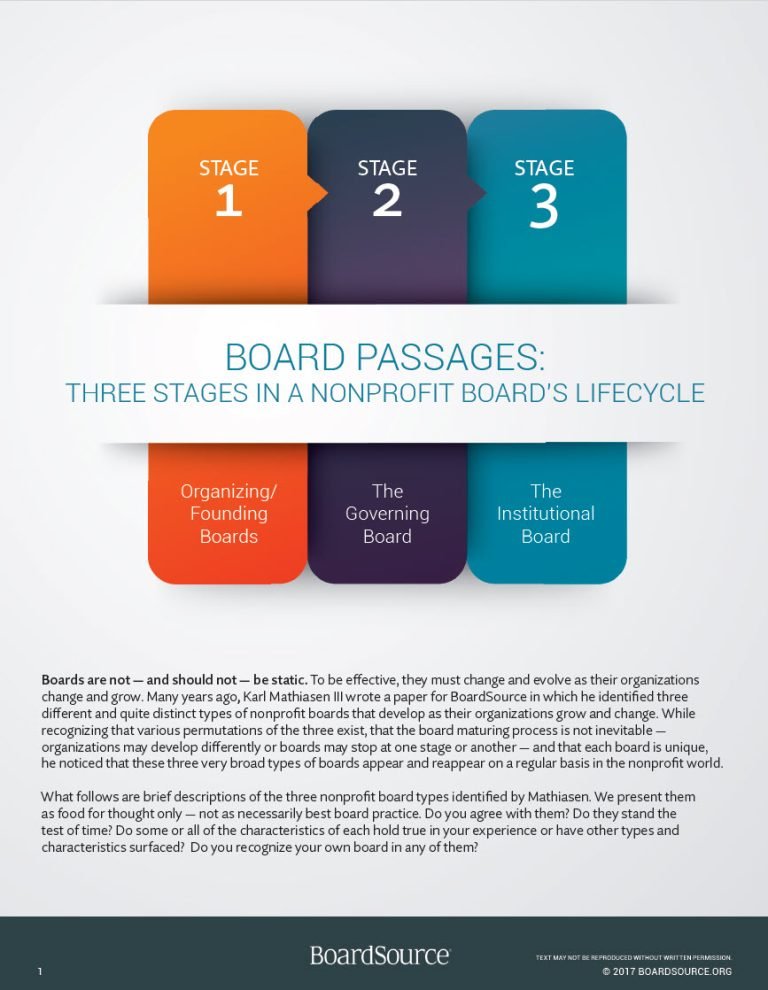
What follows are brief descriptions of the three nonprofit board types identified by Mathiasen. We present them as a point of consideration only — not
Directors are seated to fulfill the responsibilities of governance on behalf of the members – a fiduciary duty
Board Practices – A compilation of ASAE Executive Section listserv input during March, 2010.
A well-functioning Board of Directors is essential for nonprofit organizations not only to meet legal requirements, but also to successfully achieve their goals. It is
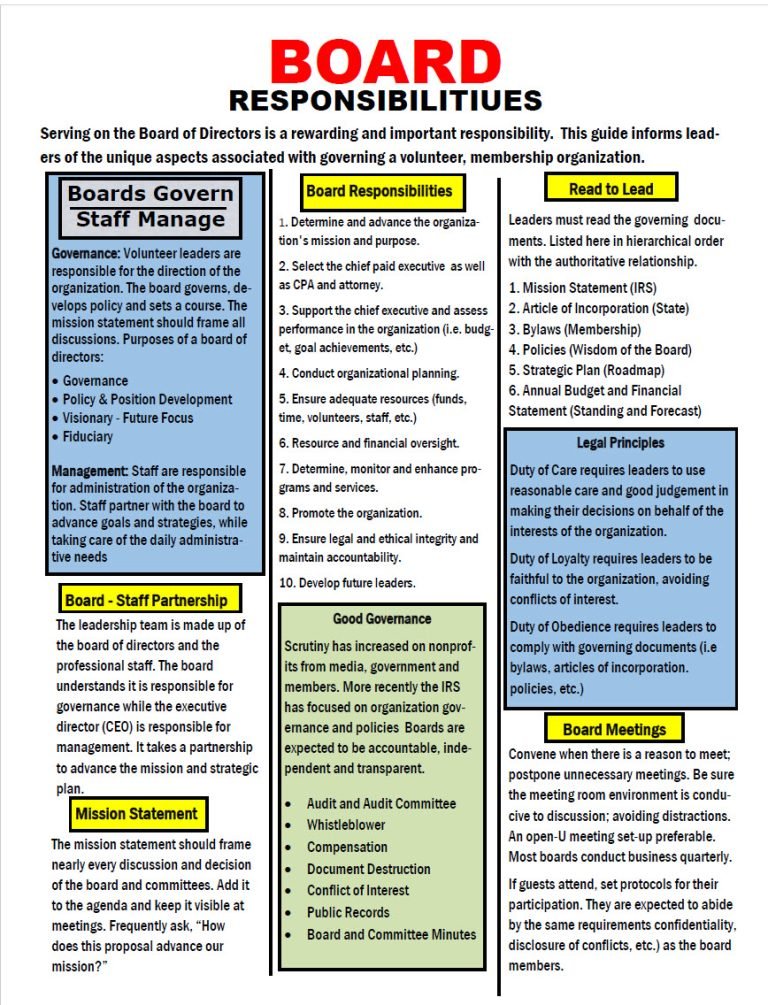
Serving on the Board of Directors is a rewarding and important responsibility. This guide informs leaders about the unique aspects of governing a volunteer membership
Nonprofit and for-profit corporations are not natural persons, meaning that they have rights and responsibilities but cannot read, write, think, or execute for themselves; corporations
Board orientation is a core competency of the chief paid executive (executive director). The toolkit provides processes and examples to help in communicating the role
The directors owe it a duty of loyalty. The duty of loyalty requires a director to act in the interest of the charity rather than