Home › Resource Library › Cooperative Basics
Resource Library topic
Cooperative Basics
What a housing cooperative is, how co-ops are organized, their history and mission, affordability, and starting a new co-op.
Categories in this topic
Choose a category to see only its resources in the Resource Library.
All resources in this topic
The search below looks within this topic only. To search all 1,388 resources, use the full Resource Library. Books and journals are listed separately under Books and Journals.
Collection: Information Hub. Books, articles, guides, reports, journals, cheat sheets and sample forms collected online from other sources. They were written by other organizations and authors, not by Berendson Academy. Search Berendson Books & Training instead for materials created by Berendson Academy.
Showing 169–192 of 196 resources
Housing is widely recognized as a crucial social determinant of physical and mental health and overall well-being. In the context of ongoing national and state
Home, Together: The Federal Strategic Plan to Prevent and End Homelessness, which was adopted by the Council in 2018.
A mission statement “is the framework for all of the chamber’s endeavors [and] the single most important declaration” a chamber makes.
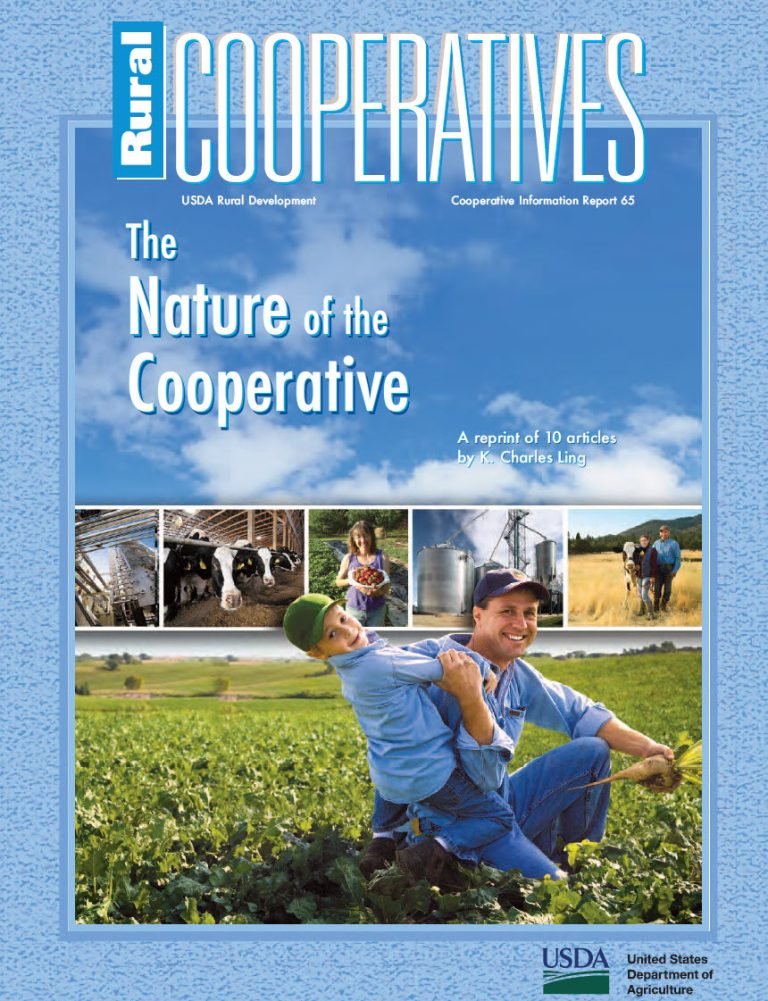
These 10 articles, collected by USDA Rural Development agricultural economist Charles Ling, were originally published in Rural Cooperatives magazine to examine the nature of cooperatives
IF LIFE WERE A BASEBALL GAME, homeownership would be like sliding into home base. Just as players reach for the plate with their outstretched fingers,
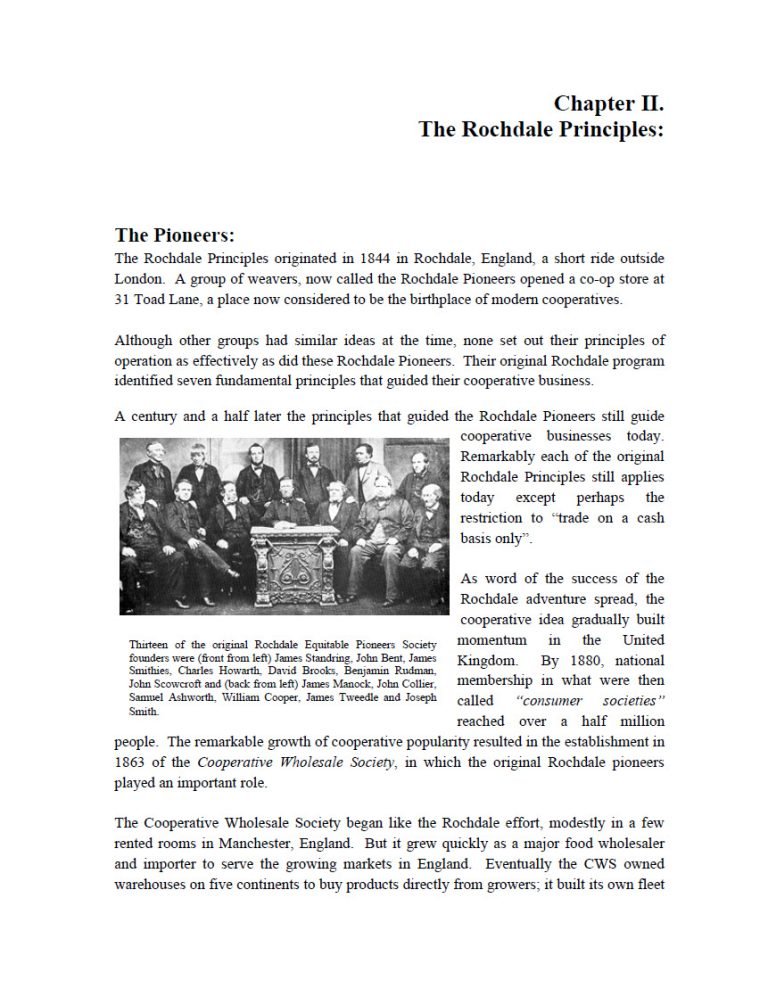
The Rochdale Principles originated in 1844 in Rochdale, England, a short ride outside London. A group of weavers, now known as the Rochdale Pioneers, opened
This article develops an economic analysis of the role of limited-equity cooperatives (LECs) in providing affordable housing. Using a model of the user costs of
The way a cooperative is organized determines how it is operated, managed, and controlled by its members, and the types of benefits offered
Fifty-one-page USDA Rural Development report (Cooperative Information Report 65, February 2012, revised November 2014) reprinting ten articles by agricultural economist Charles Ling from Rural Cooperatives
Few processes can get as bogged down as identifying the mission and developing the mission statement. It is essential to focus on the substance of
There is mounting evidence that more compact, mixed-use development is a more cost-efficient and environmentally sustainable form of development than low-density suburban development.
Cooperatives are owned by their members, which can include consumers, producers/farmers, workers, businesses or organizations, municipalities, and other cooperatives.
We argue that new cooperative organizational models differ in how ownership rights are assigned to the economic agents (Members) tied contractually to the firm.
A guide for designers, builders, and developers of multi-unit residential buildings
As the population of our society ages, the need for housing alternatives for senior citizens is becoming increasingly important. Most people want to stay in
This guide outlines the process of organizing and financing a cooperative business. Rather than being a comprehensive handbook, this publication highlights the key elements to
The purpose of this publication is to provide a guide for cooperative management teams, enabling them to manage equity capital more effectively. Regardless of the
Throughout this booklet, we use the term “insurer” to refer to the company that collects premium dollars and pays out money to defend and settle
Today, however, most cities around the world face major challenges in providing safe and adequate housing for their residents, especially in rapidly growing cities where
Members democratically control their cooperative by exercising the voting rights that come with membership.
The cooperative business structure provides insurance, credit, healthcare, housing, telephone, electricity, transportation, childcare, and utility services. Members use cooperatives to buy food, consumer goods, and
A Housing Cooperative is a form of homeownership in which the residents collectively own and control the developments in which they live. Residents buy membership
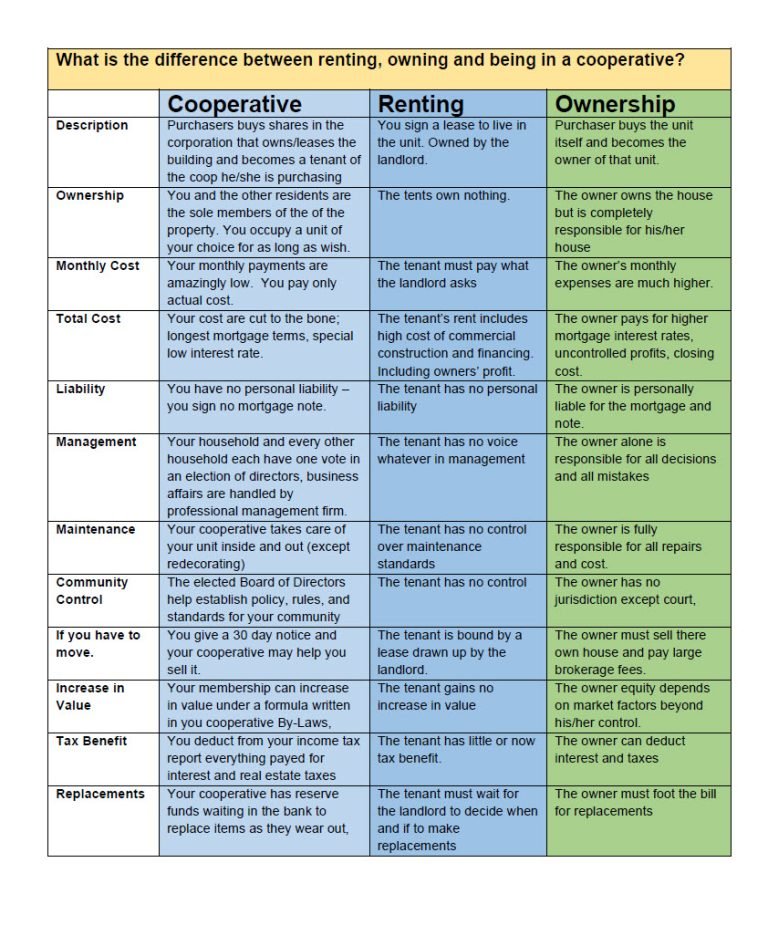
A side-by-side chart comparing cooperative membership with renting and with owning a home. It contrasts ownership, monthly and total costs, personal liability, management, maintenance, community
On October 1, 2002, Agway filed for Chapter 11 bankruptcy. Many people are asking what went wrong. This is a hasty attempt by the authors