Community association board members spend a lot of time communicating, whether it’s with one another, community members, vendors, or your management company
Congratulations, you have been accepted as a member of your community association’s board of directors.
If you have chosen to dedicate valuable time serving as a board member, giving the job your best effort requires you to refine certain skills

Board members often have long tenures, and your board has tremendous responsibility and decision-making power. As such, it’s critical to the success of your organization

Not all directors know the meaning of governance. Some join the board with experience in their own work settings — making administrative or tactical decisions

What hat was she wearing, a chapter director, a board member? She was appointed to the board because the bylaws permit representation from each chapter.
When I was asked which skill was most essential for board members, I immediately considered one that I thought they should definitely master: listening.
Part of our Theory of Change is that when nonprofits are well-led, well-resourced, and well-connected, they achieve mission success.
Every board has a set of values, whether its members are aware of them or not. Some organizations add a list of values to complement

What follows is a general overview of the responsibilities of your board of directors, with special emphasis placed on improving your regular board meetings.
Orientation is the process of delivering information to the board of directors. Generally, the directors listen and ask questions about their responsibilities
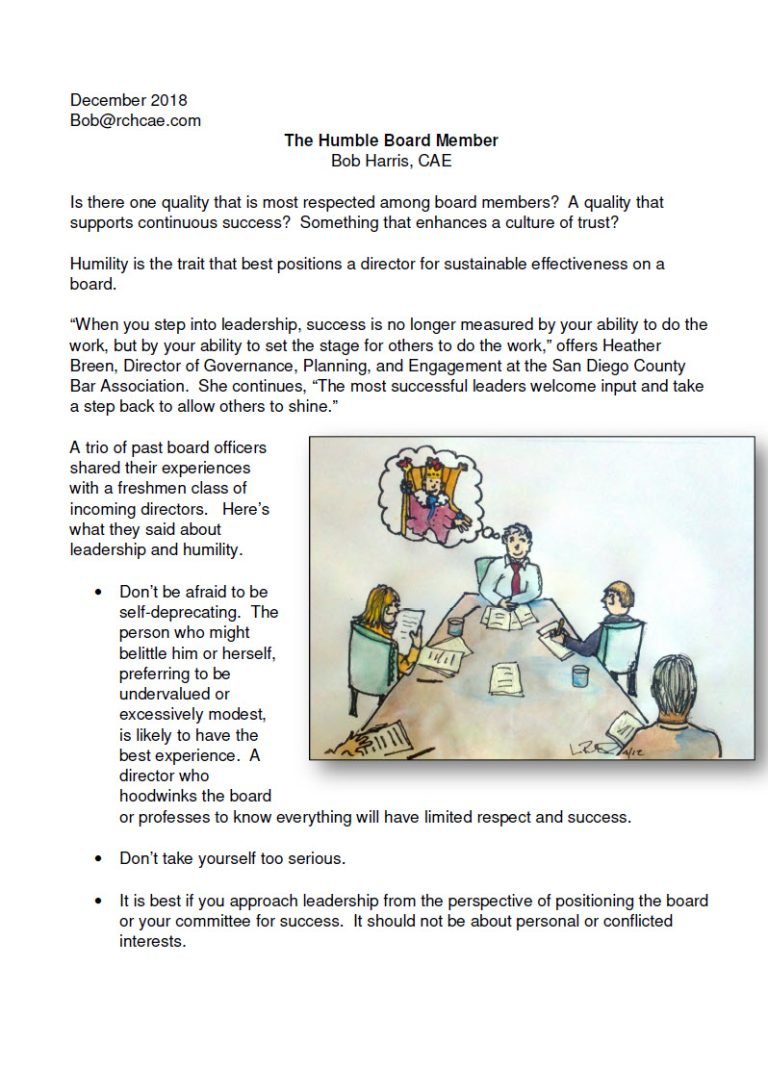
Is there one quality that is most respected among board members? A quality that supports continuous success? Something that enhances a culture of trust?

The role of a cooperative board is to ensure the long-term success of the enterprise.