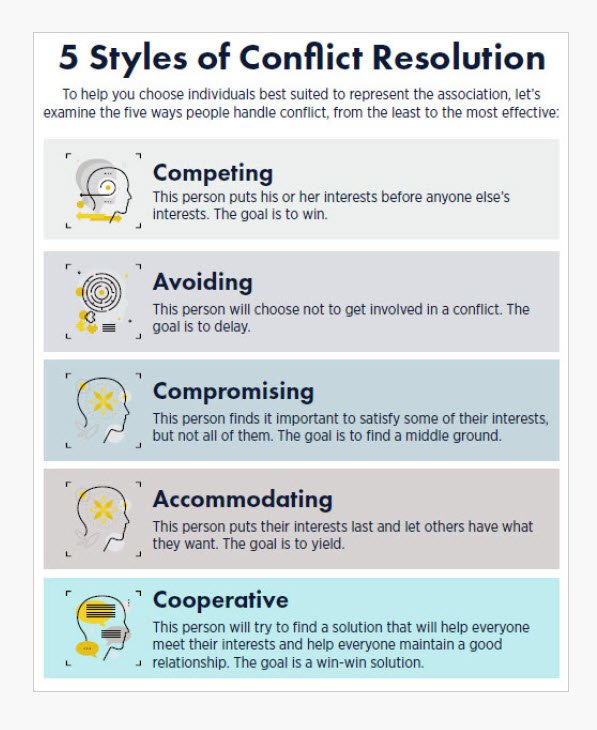
To help you choose individuals best suited to represent the association, let’s examine the five ways people handle conflict, from the least to the most
Are nonprofit board members required to conduct themselves in any particular manner? Yes! Under well-established principles of nonprofit corporation law, a board member must meet
Meetings are a crucial tool for democratic management. Effective meetings result in clear, agreed, and delegated decisions to which everyone is committed. They should be
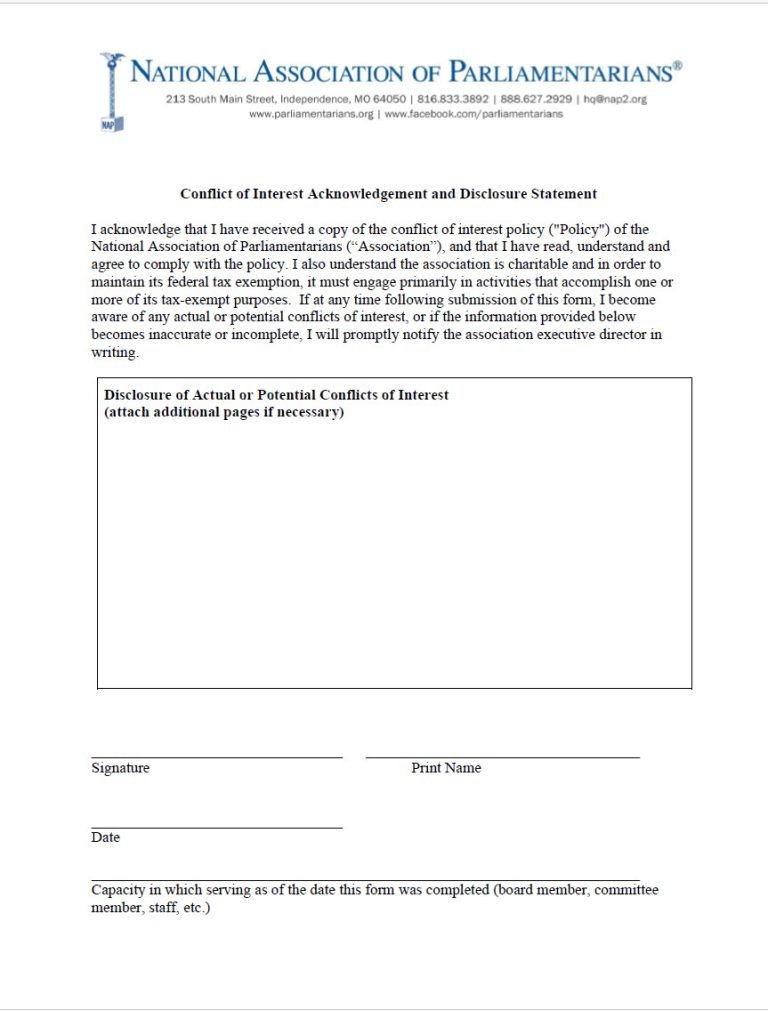
I acknowledge that I have received a copy of the conflict-of-interest policy (“Policy”) of the National Association of Parliamentarians (“Association”), and that I have read,
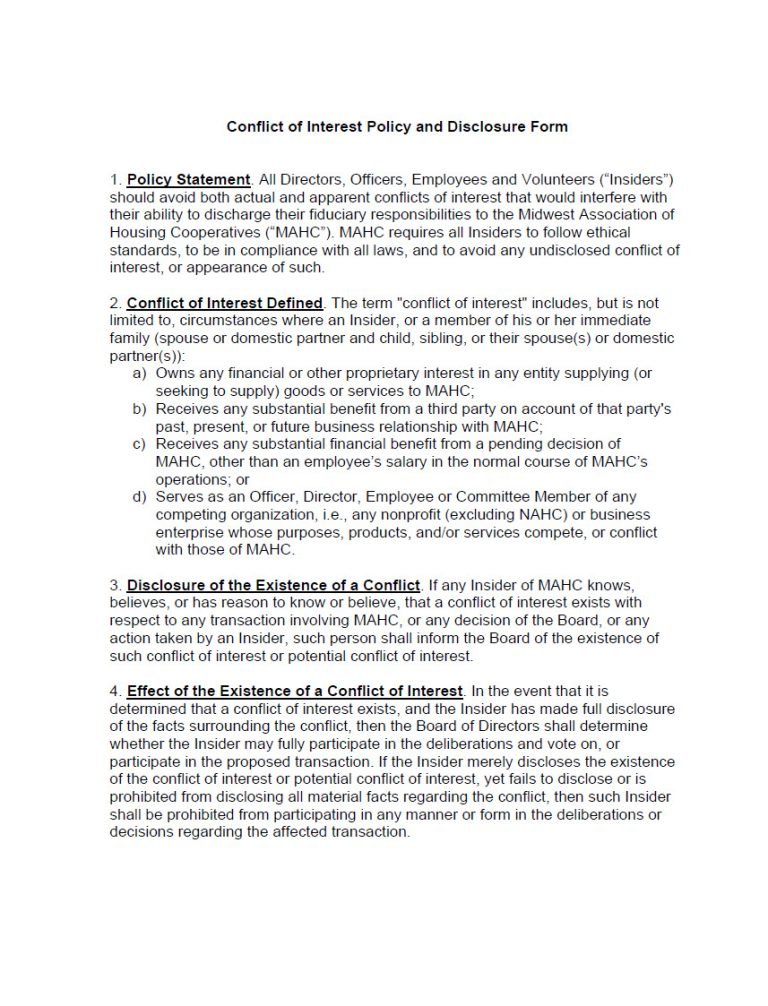
All Directors, Officers, Employees and Volunteers (“Insiders”) should avoid both actual and apparent conflicts of interest that would interfere with their ability to discharge their
Booklet 4 explores the tensions that can arise in a co-operative development and identifies tools, techniques, and approaches that will help as the co-operative experience
This booklet describes how misunderstandings or unchecked assumptions about the role and responsibilities of the board can lead to organizational conflict.
The booklets are aimed primarily at ‘flat’, democratically managed co-operatives, whether small or large. However, they will be useful for any group working democratically.
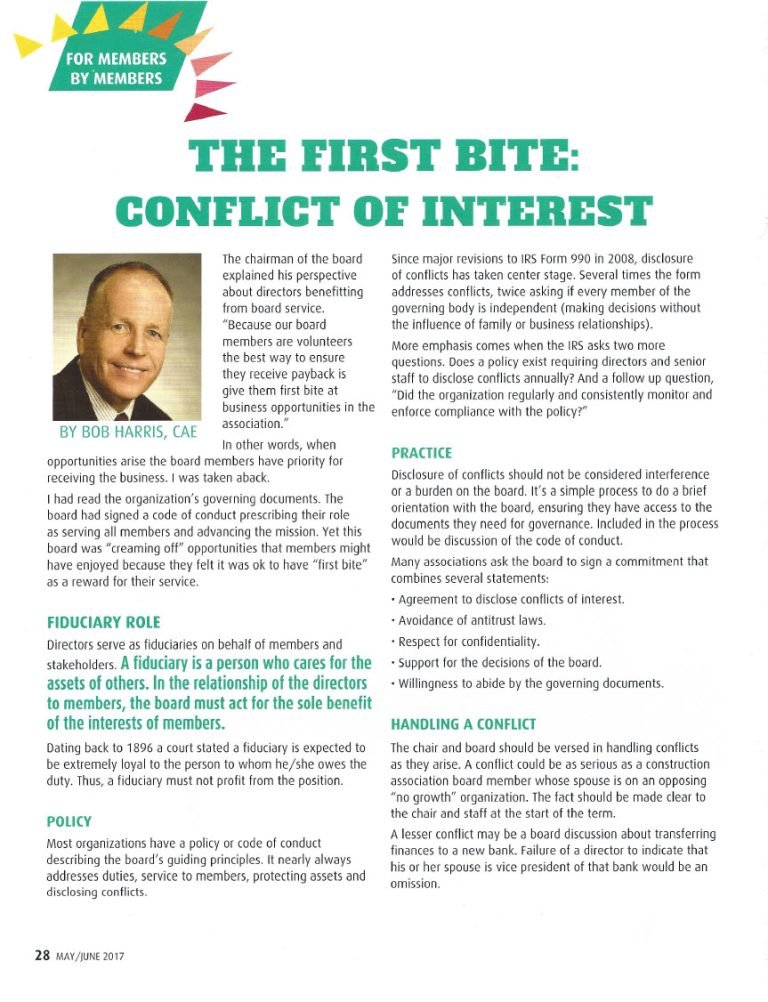
I had read the organization’s governing documents. The board had signed a code of conduct prescribing their role as serving all members and advancing the
Successful organizations are characterized by strong chief executive–board chair partnerships — partnerships founded on respect and trust and focused on serving as each other’s sounding
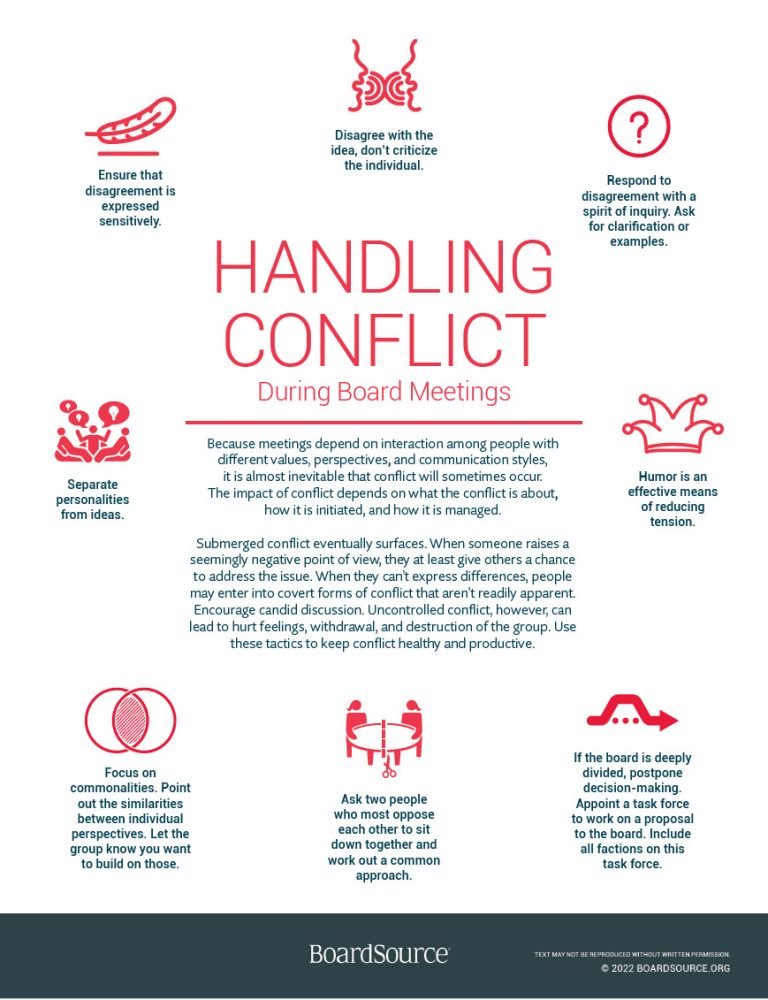
Because meetings depend on interaction among people with different values, perspectives, and communication styles, it is almost inevitable that conflict will sometimes occur.
Booklet 4 explores the tensions that can arise as a co-operative development and identifies tools, techniques, and approaches that will help as the co-operative experiences
This booklet describes ways in which misunderstandings or unchecked assumptions about the role and responsibilities of the board can lead to organizational conflict. We suggest
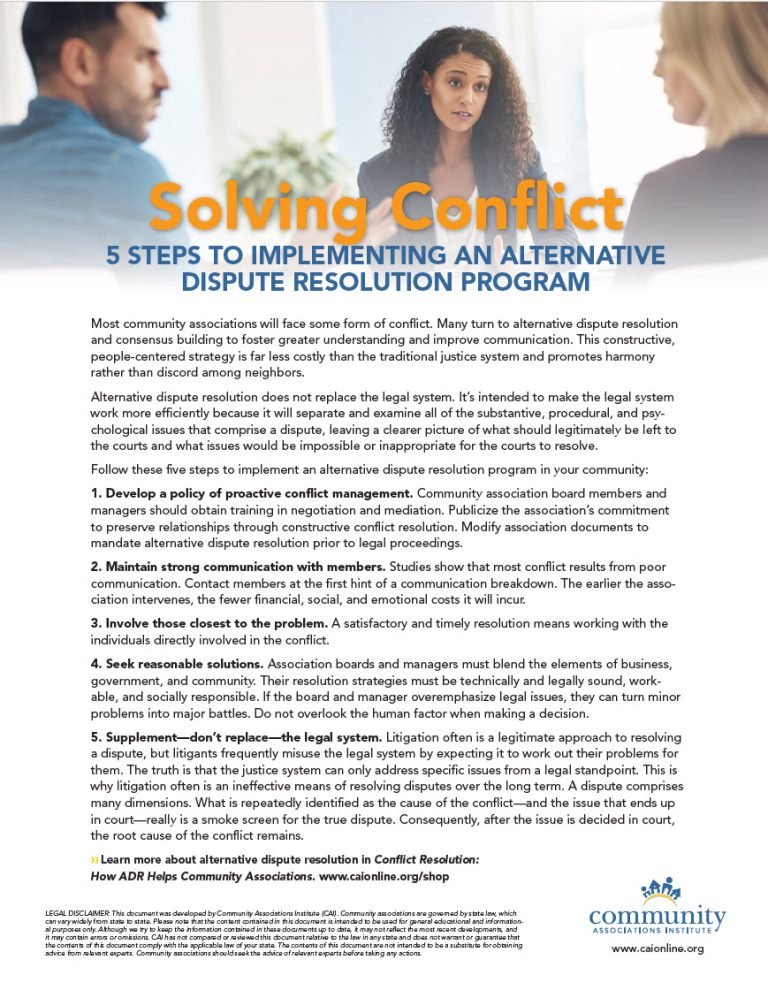
Most community associations will face some form of conflict. Many turn to alternative dispute resolution and consensus-building to foster greater understanding and improve communication.