Home › Resource Library › Governance, Policy & Legal
Resource Library topic
Governance, Policy & Legal
Governance practices, policies, bylaws, articles of incorporation, house rules, legal compliance and HUD forms.
Categories in this topic
Choose a category to see only its resources in the Resource Library.
All resources in this topic
The search below looks within this topic only. To search all 1,388 resources, use the full Resource Library. Books and journals are listed separately under Books and Journals.
Collection: Information Hub. Books, articles, guides, reports, journals, cheat sheets and sample forms collected online from other sources. They were written by other organizations and authors, not by Berendson Academy. Search Berendson Books & Training instead for materials created by Berendson Academy.
Showing 49–72 of 213 resources
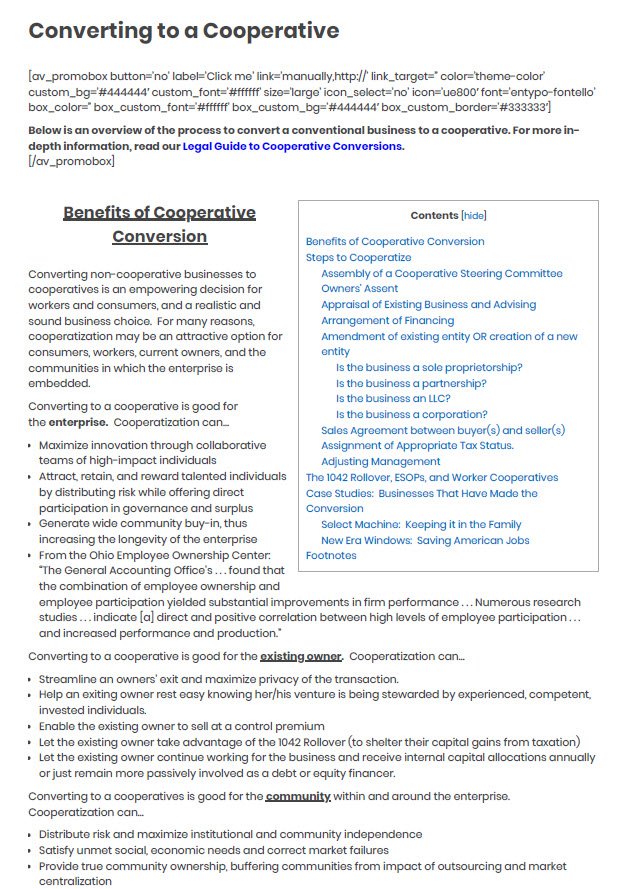
Converting non-cooperative businesses to cooperatives is an empowering decision for workers and consumers, and a realistic and sound business choice.
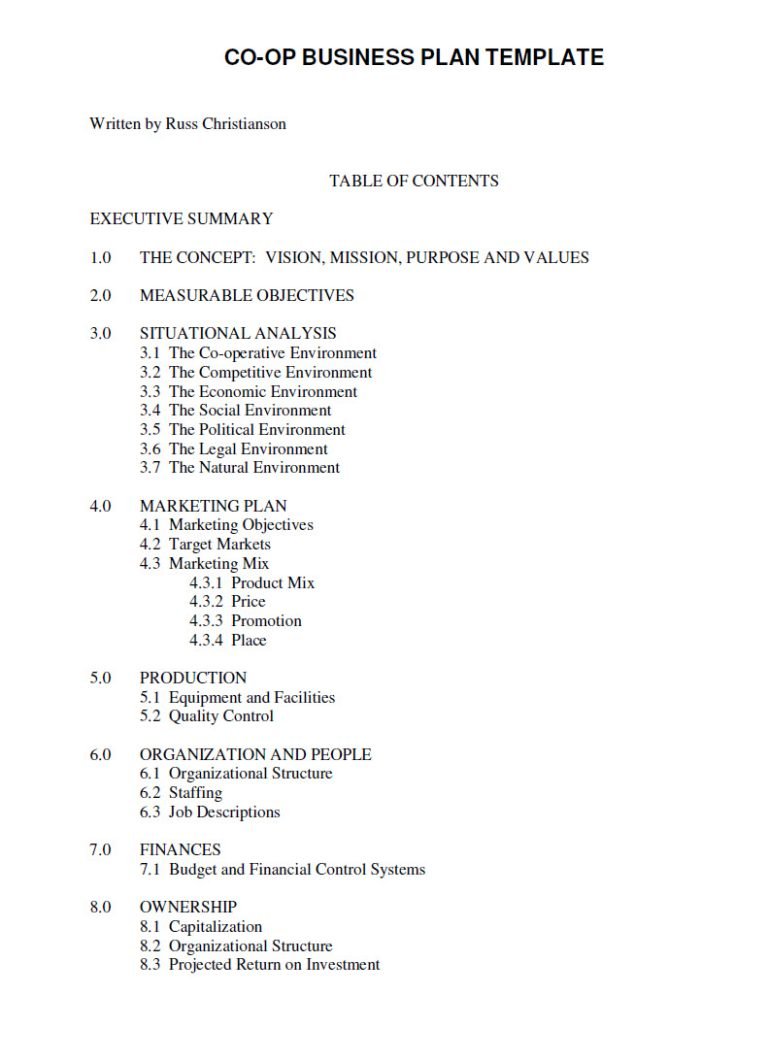
Fifteen-page business plan template for cooperatives by Russ Christianson. It walks through vision and values, objectives, situational analysis, marketing, production, staffing, finances and member capitalization.
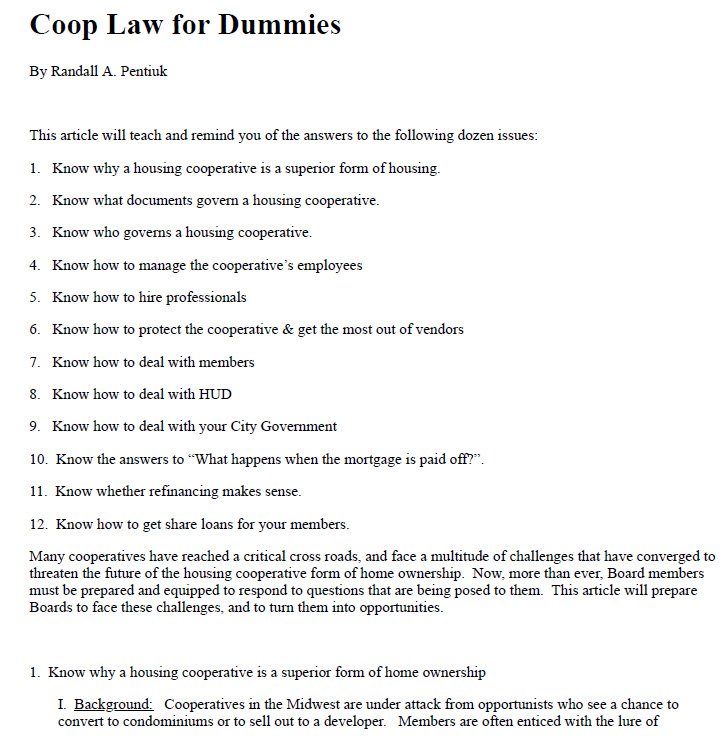
This article will teach and remind you of the answers to the following dozen issues:
Governance is a key component of the co-operative difference. The co-operative values and principles call for an open, voluntary, and democratic process of decision-making, and
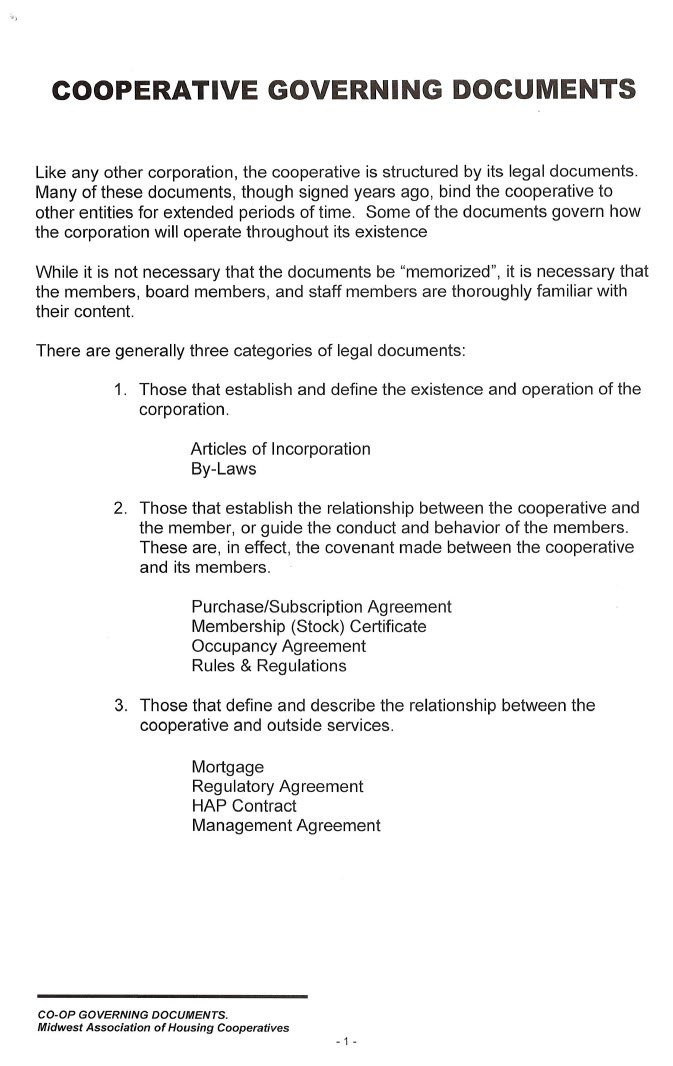
Many of these documents, though signed years ago, bind the cooperative to other entities for extended periods of time
Despite its title, this is a five-page board self-assessment survey for cooperatives. Directors and the general manager rate statements on teamwork, board meetings, the board–manager
Cooperatives are considered jointly owned and democratically managed enterprises formed through the voluntary association of individuals to meet the needs of their members. This type
Applies to Co-operative Corporations, Business Corporations and Not-For-Profit Corporations. Generally, directors, officers, and members/shareholders are not liable for the actions or wrongs committed by a
The Self Assessment Workbook: Corporate Governance – Board of Directors (the “Workbook”) is for use by all credit unions
A neglect of governance weakens the framework of accountability and carries multiple risks to the business and its strategy over time. Conversely, good governance supports
Families all across the United States are struggling to afford the cost of a home. Everywhere you look — cities, suburbs, rural areas — the
Every co-op or condo has rules and regulations that have been established to define the board’s authority and limitations of power, as well as outline
I promote the concept of a high-performing board committed to advancing organizational excellence and achieving results.
Six-page white paper by Anne Reynolds of the University of Wisconsin Center for Cooperatives, published by the CHS Center for Cooperative Growth. It explains how
A democratically run building will have all tenants involved at one time or another performing some task, no matter how small. It is a way
Worker cooperatives are built on a framework of democracy, but this does workers very little good unless the means to exercise their rights and enjoy
The Sarbanes-Oxley Act addresses the destruction of business records and documents, making intentional document destruction a process that must be carefully monitored.
This resource explains why it is essential for boards to maintain accurate records and provides practical suggestions on how to achieve this effectively.
Shelters provide short-term responses to the challenge of Homelessness, including temporary accommodation with a strong focus on helping Clients move into Housing.
Nonprofit organizations are required to have a board of directors, a governing body, as stated in the organization’s bylaws. The governing board is the leadership
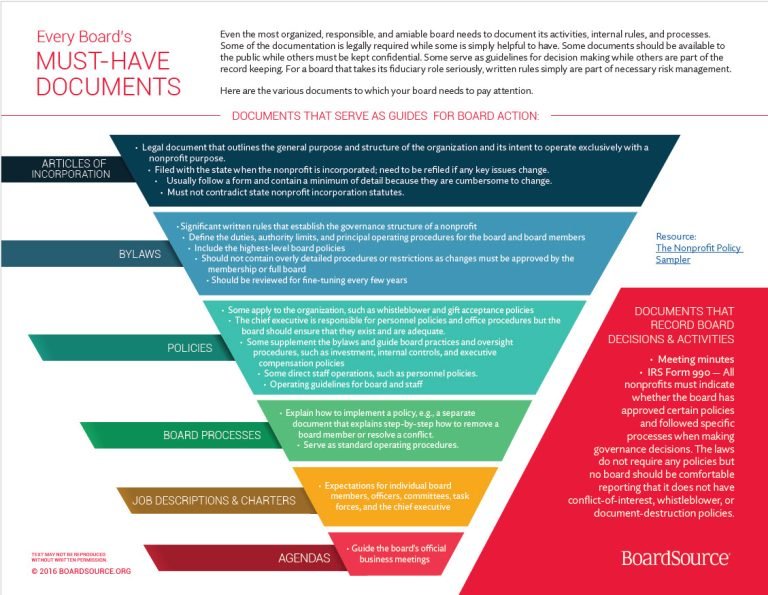
Some of the documentation is legally required, while some is simply helpful to have. Some documents should be available to the public while others must
“Written by two leading experts in the field of board development and fundraising, Board Members Rule reframes the board member’s role to include a strategic
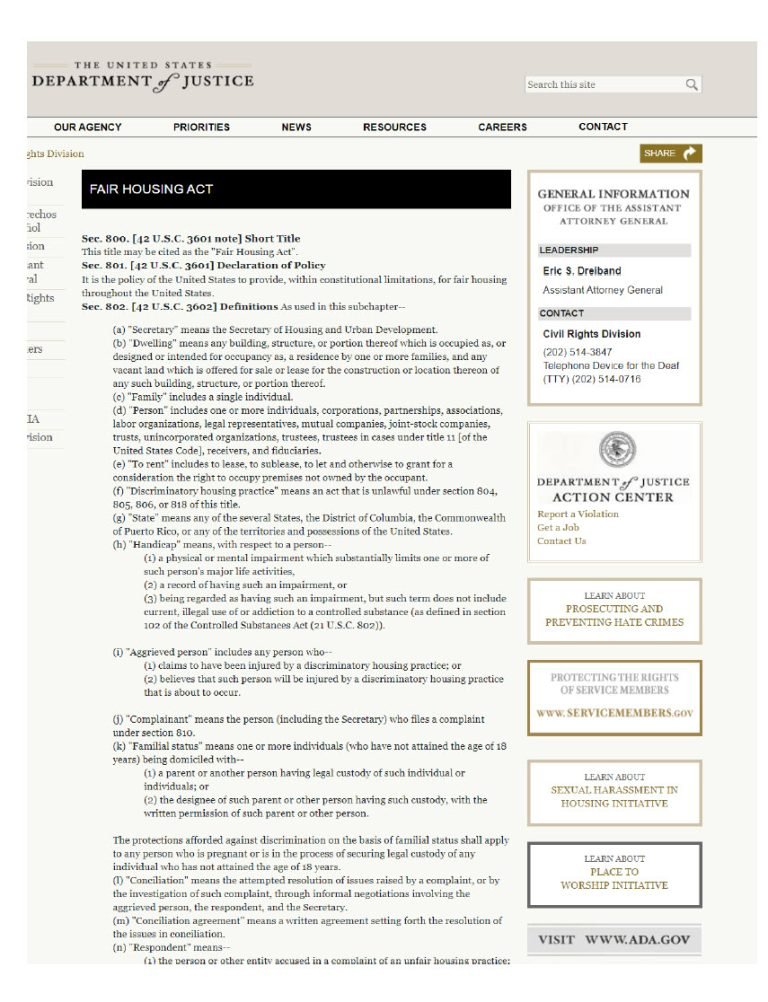
The complete text of the federal Fair Housing Act as codified in Chapter 45 of Title 42, United States Code (sections 3601–3631), from the official
An undated one-page reference for the Illinois area listing the classes protected from housing discrimination under federal law, Illinois state law, the City of Chicago