The search below looks within this topic only. To search all 1,388 resources, use the full Resource Library. Books and journals are listed separately under Books and Journals.
Collection: Information Hub. Books, articles, guides, reports, journals, cheat sheets and sample forms collected online from other sources. They were written by other organizations and authors, not by Berendson Academy. Search Berendson Books & Training instead for materials created by Berendson Academy.
Two-page list of twelve tips for writing an effective brochure: decide what it must achieve, keep the copy short, promote the organization, its services and
Access to a safe, decent, and affordable home can build a stable foundation for families and propel them to improve their health, boost their educational
Thirty-eight presentation slides by Jeanne Sheehy, Vice President and Chief Marketing Officer of the association management company Bostrom, on communicating more effectively by email and
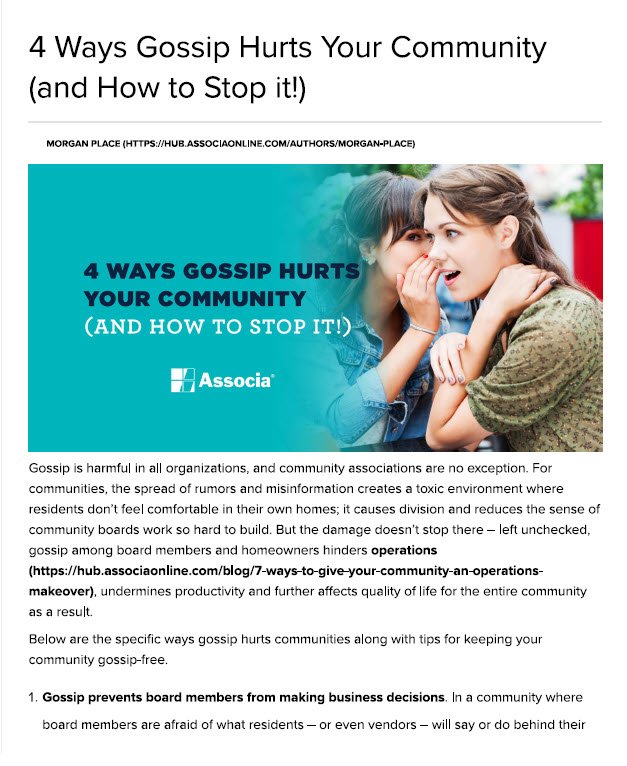
Five-page web article from Associa, a community association management company, on four ways gossip harms a community association, starting with how it keeps board members
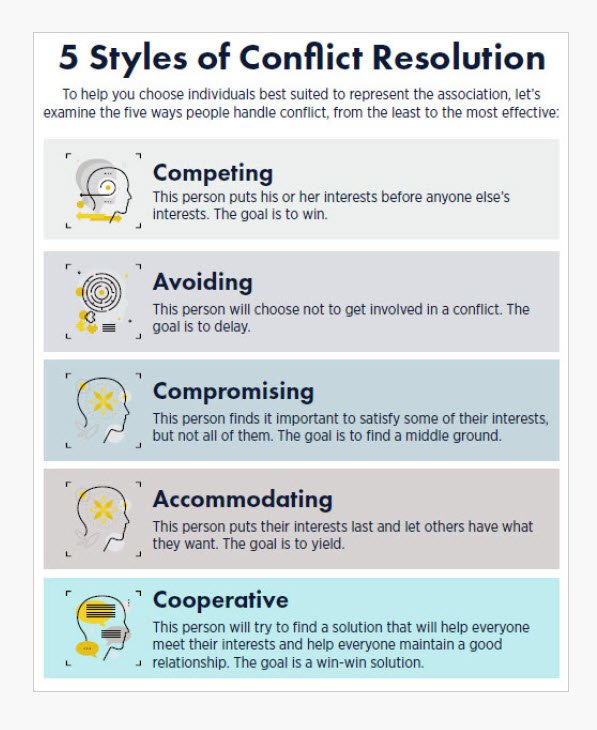
To help you choose individuals best suited to represent the association, let’s examine the five ways people handle conflict, from the least to the most
Though cooperative businesses have existed for over 100 years, evidence about their unique contributions to American economic activity, community vitality, and worker well-being is still
Do your board members seem disinterested during meetings? Do your discussions regularly stall? It could be because your board is not being asked to think
Are nonprofit board members required to conduct themselves in any particular manner? Yes! Under well-established principles of nonprofit corporation law, a board member must meet
Rather than passively accept a future shaped by outside forces, nonprofit and local community leaders came together to define a vision and strategy for change.
In this booklet, we start by outlining some basic communication concepts. We then examine steps we can take to enhance communication, including avoiding misunderstandings that
perhaps even the long-term ‘holy grail’ – for pursuing a more embedded, engaged and ultimately a more encompassing energy transformation for our societies. People –
Homeownership has been a cornerstone of US housing policy since the Great Depression. Its normative value is steeped in visions of white picket fences and